
In a workspace where decisions rely heavily on data, in today’s data-driven world, even smart teams make bad calls when they don’t understand their data or are misguided if the data insights are poor or not properly understood. Office 365 reports can prove invaluable for understanding the ins and outs of users’ actions, whether it be managing users, user licenses, or even security events.
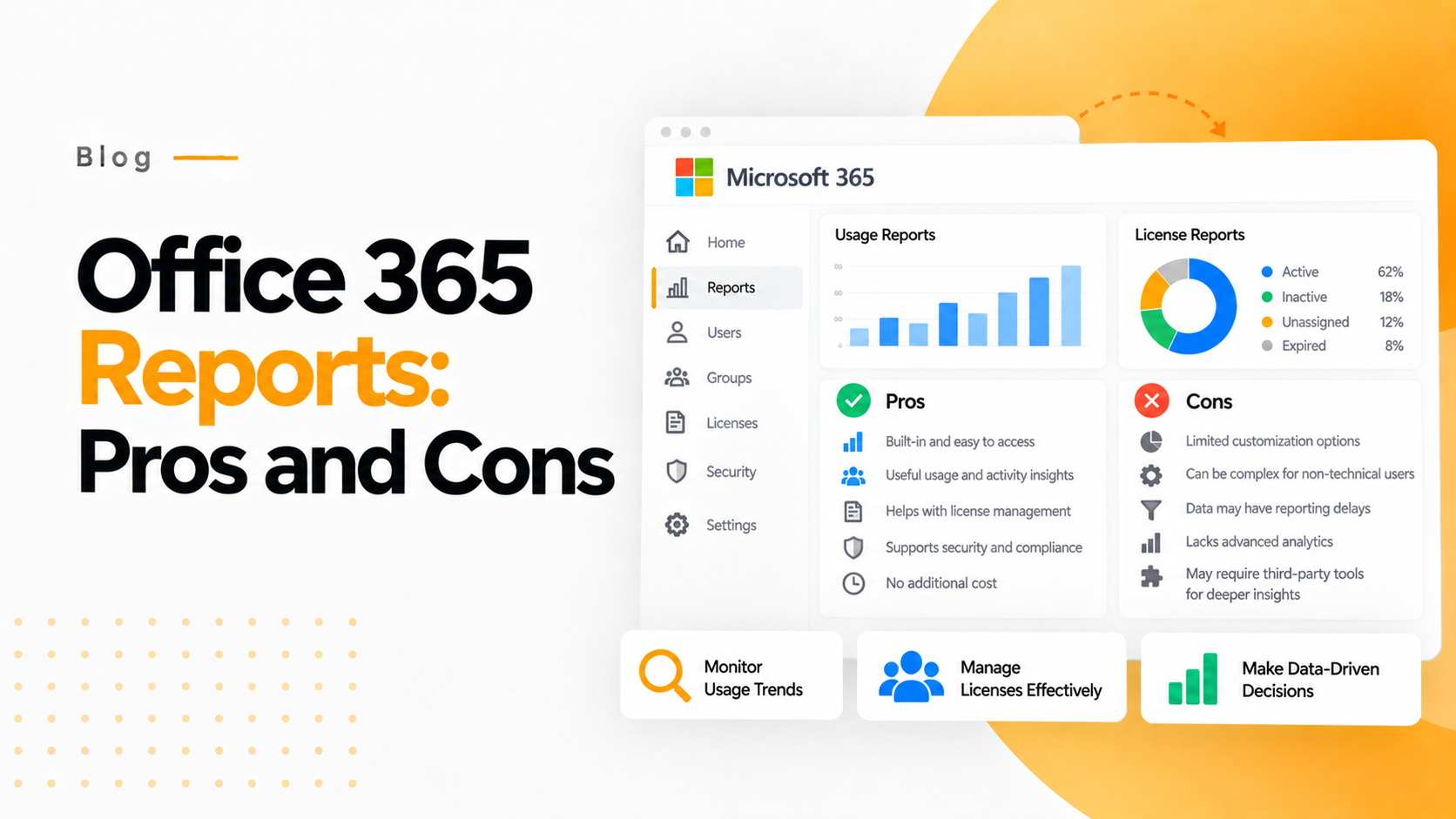
You should always expect trade-offs, even with the best enterprise tools. Below are the most relevant points on the pros and cons of Office 365 reports. No marketing spins, only the straight truth.
What Are Office 365 Reports?
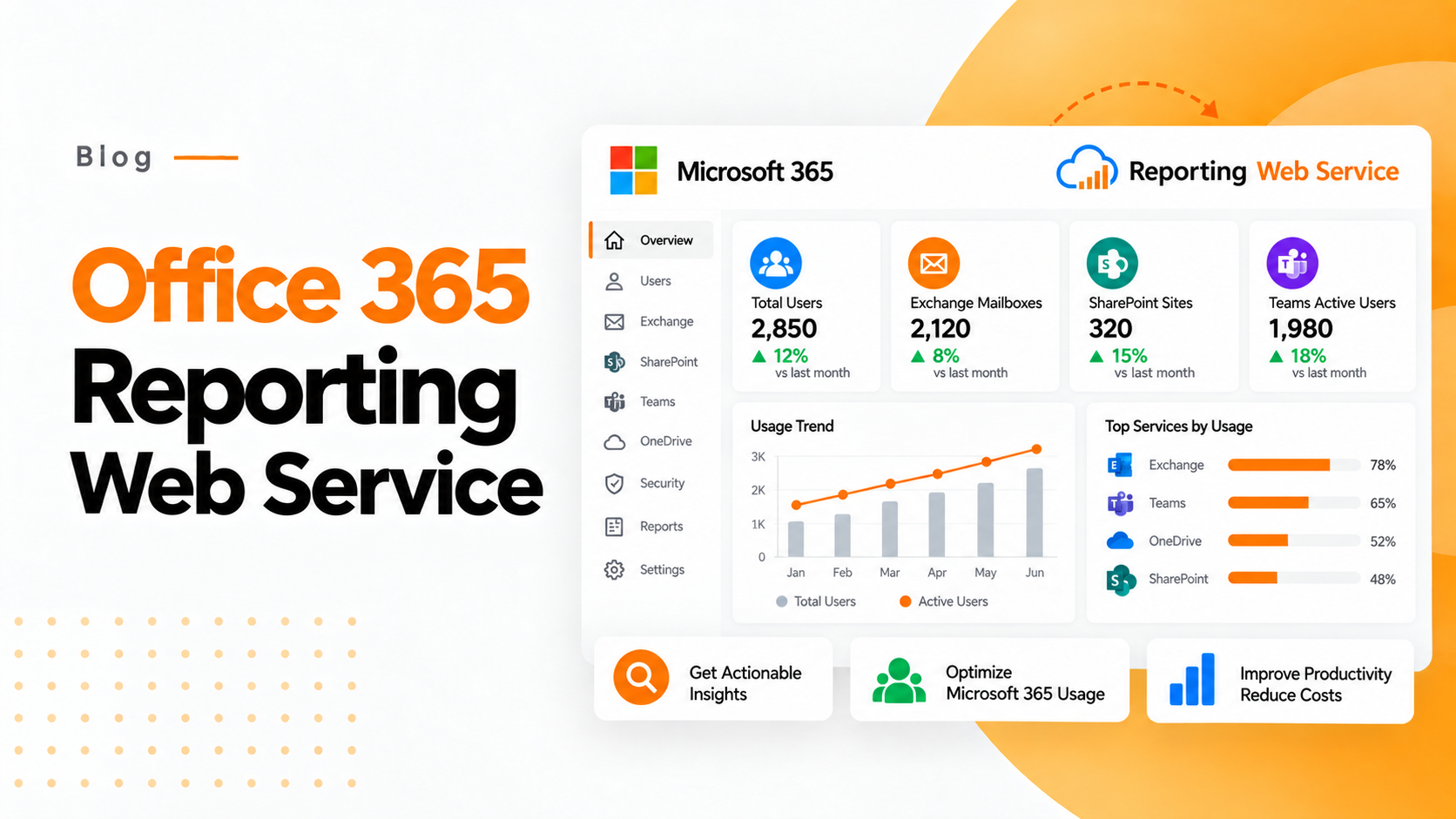
Office 365 (now known as Microsoft 365) provides a suite of integrated reporting tools that give clarity into how users interact with apps like Outlook, Teams, SharePoint, and OneDrive. The reports track management patterns, adoption rates, storage, security events, and more. Suddenly, one can access them directly from:
You can access these reports directly from the Microsoft 365 Admin Center or blend them with Power BI for advanced visualization. It serves as an automated dashboard for IT admins and business leaders who need actionable visibility across their system’s automated counter.
Pros of Office 365 Reports
1. Centralized visibility across apps.
Instead of switching between different tools, you can monitor all the emails, Team activity, OneDrive storage, and SharePoint collaboration from the same control panel. This perspective allows for quick pattern detection and data-driven decisions. Outcome example: using the above-mentioned information, we can also observe that the number of teams that people joined has decreased, while the active usage of Outlook has increased. From this, we can conclude that assistants are not currently good at communicating with each other and need to be retrained in terms of collaborative workflows.
2. Real-Time Usage Insights
The Office 365 reports are frequently updated every day, meaning that they give the admin a view of system activity that is nearly real-time. They can discover unused accounts, ascertain the amount of space used, or even identify which apps users use the most. This is important, especially for potential problems like license misuse or security gaps, as they can be addressed before they escalate. It matters because anonymous data = proactive management.
3. Built-In Security and Compliance Reporting
The Reporting Suite shows just how seriously Microsoft values security.
Organizations can monitor:
- Suspicious log-in attempts
- DLP events
- Files shared externally
- Quarantined malware and other malware detections
- DLP Audits
This insight enables your company to comply with GDPR, HIPAA, or ISO standards while ensuring your environment is secure.
4. User-Friendly Dashboard
Microsoft understands that not every team has a data analyst. The Admin Center is intuitive, with clear visuals, summary outputs, and charts available for export.
Non-technical managers can assess adoption rates or progress and generate internal review files in CSV or Excel format. Reporting is that simple and intuitive. It is straightforward, usable reporting.
5. Integration with Power BI
This is where things go from “good” to “excellent.”
In “Get and Transform,” or Power Query, users can pull unprocessed Office 365 data and convert it into interactive, filterable, drillable, and trendable dashboards. You may figure out how SharePoint storage evolved, how team engagement grows, and how both correlate with project completion or with time.
This is more than reporting. This is active, real-time business intelligence and analytics.
6. Unutilized License Cost Optimization
You can cut down costs by disconnecting unused Office 365 licenses. The report shows it is easy to spot inactive users, unused apps, and licenses that aren’t being put to work. For big companies , trimming out those unused licenses can save a ton of money.
7. Productivity and Accountability Boost
There’s an increase in awareness when employees know their performance is monitored. Administrators know who is idly collaborating and which applications are most value-driving. It’s about reducing friction and increasing the value of their time, not micromanaging.
Cons of Office 365 Reports
1. Limited Historical Data
- Having data for only 180 days will not be useful for long-term insights.
- It makes it hard to see how usage or growth changes over the years.
- The increase in complexity of using APIs and exporting data to Power BI should not be necessary.
2. Surface-Level Analytics
The reports are excellent for providing an overview and not for detailed analysis. Knowing how many Team meetings there are is not useful if you do not know how effective they are. There are ways to see which departments are inactive in driving SharePoint activity, but you won’t find that easily. Custom Power BI reports or third-party analytics solutions like Quest or SysKit would help.
3. Data Delays
- Real-time is not the case for some reports, which can update on a 24 to 48-hour cycle.
- In most operations, that is acceptable, but when there is a compromised account, a delay is risky.
- A visibility delay of even a day can cause a situation that cannot be acted on.
4. Limited Flexibility
- Office 365 reporting templates can be a bit inflexible.
- Chart styles, data type combinations, and admin dashboards’ most significant KPIs cannot be created, changed, and adjusted easily.
- Power BI, PowerShell scripts, and other complex/technical work would be required.
5. Steeper Learning Curve
- Basic Office 365 reporting is straightforward and simple.
- However, complex cross-platform data analysis, API, and automated export integration come with a steep learning curve.
- Admins have to work with PowerShell guides and other documentation to achieve the desired level of reporting automation.
6. Ethics and Privacy
- Insight tracking, such as file editing and meeting durations, can be considered a “Big Brother” type of observation.
- Organizations need to focus on improving performance, with the hidden goal of surveillance, even if the data tells a different story.
- Transparency with employees about what the data reveals and what is being tracked goes a long way in building trust.
7. More Cost for Premium Features
- Basic out-of-the-box reporting is included in Microsoft 365 plans, while advanced analytics, such as dashboards from Power BI Pro, come with an additional cost.
- Earned reporting in the plan is free, and seemingly unlimited reporting options will be capped with an additional cost on your Microsoft 365 plan.
Making The Most of Office 365 Reports
For Office 365 reporting to be really effective, try the following:
- Regularly export data to Power BI for extended insights.
- Configure alerts for anomalies within the security and usage parameters.
- Create dashboards based on user roles—IT, management, HR, etc.—to ensure they have what they need.
- Conduct a quarterly cleanup of inactive licenses.
- Teach teams basic report-reading skills to promote openness.
When Office 365 reports are smartly applied, they cease being “just another admin tool” and become a highly valuable strategic layer.
Final Verdict
If data management is one of your primary concerns to track productivity, compliance, and cost, then Office 365 reports are the best option. They are reliable, easy to compile, and simple to use on a daily basis.
However, long-term analysis and custom metrics will still require Power BI or other custom solutions.
So, are they ideal? Certainly not—which is still a striking testament to the balanced nature of the reporting system, designed for the dual purpose of serving IT and business needs.